Your Detailed Tax Review Report
Prepared for: Test Business Client, TestCo LLC · Tax Year: 2025
Prepared by: LPB Tax and Accounting Services, Nicolette Yeardé, CPA, EA, MTax, using an AI-assisted review framework.
Your 2 Follow-Up Questions
You can email up to 2 follow-up questions about this report to info@lpbservices.com. Please include your name and tax year so we can match your questions to this review.
Full Analysis and Findings
AI-assisted review · For informational purposes only
Prepared by Nicolette Yearde, CPA, EA, MTax
LPB Tax and Accounting Services
Business Tax Review for TestCo LLC (Schedule C Sole Proprietor)
Tax Year: 2025
1. EXECUTIVE SUMMARY
- Business: TestCo LLC, Schedule C sole proprietor
- 2025 results: Revenue $120,000; Net income $45,000; Net margin 37.5%
- Current federal balance due: $6,000
- State: Georgia
- Special situations reviewed: Home office deduction, vehicle expenses
- Audit risk: No flagged issues in intake, but certain deductions require documentation
- Bottom line: Tax position is straightforward and healthy. Estimated self-employment tax on 2025 net profit will materially affect after-tax cash flow. There are actionable, low-friction tax-planning moves that can reduce 2025 taxable income and 2026 estimated tax payments.
2. ENTITY STRUCTURE ANALYSIS
- Current entity: Sole proprietor (Schedule C) — simple compliance and low administrative cost.
- Advantages: Full control, easy reporting, pass-through taxation.
- Disadvantages: All net profit subject to self-employment tax and individual income tax. No separation of payroll and distributions.
- Consideration of S corporation election: With $45,000 net income, the administrative and payroll costs of an S corporation generally outweigh likely payroll tax savings. Typical break-even for S election is usually higher than your current net income, although the precise threshold depends on how much reasonable salary could be shifted to distributions and on state-level payroll tax and compliance costs in Georgia.
- Recommendation: Continue as Schedule C for 2025. Re-evaluate entity election if net business income regularly exceeds $80,000 to $100,000 or if you plan significant growth.
3. DEDUCTION GAPS IDENTIFIED
- Home office deduction
- Confirm that area used exclusively and regularly for business is documented (square footage method or actual expenses).
- If not already claimed, you can allocate a portion of rent/mortgage interest, utilities, insurance, and repairs. We will calculate either simplified or actual method and select the higher benefit.
- Vehicle expenses
- Maintain contemporaneous mileage log showing business miles, date, purpose, and odometer readings. If using standard mileage rate, ensure you have records of starting odometer and business miles. If using actual costs, collect receipts for fuel, repairs, insurance, lease payments, and depreciation.
- Retirement contributions
- You are underutilizing retirement plan opportunities. You can reduce taxable income by contributing to a SEP IRA or Solo 401(k). See Section 5 for dollar estimates.
- Estimated tax planning
- With a federal balance due of $6,000 for 2025, adjust 2026 estimated tax payments or withholdings to avoid penalties.
- Other potential deductions to confirm: business insurance, continuing education, professional fees, software subscriptions, qualified startup amortization if applicable.
4. QBI DEDUCTION ANALYSIS
- Basic estimate: Qualified Business Income (QBI) is approximately your net Schedule C profit, $45,000, subject to normal QBI rules and thresholds. Given your income level, you are below the typical phase-in thresholds for wage and qualified property limitations.
- Estimated QBI deduction: 20% of QBI = 0.20 × $45,000 = $9,000 (estimated).
- Impact: The $9,000 QBI deduction will reduce taxable income and lower your income tax. This is separate from the self-employment tax calculation.
- Caveats: Final QBI depends on taxable income after adjustments, any net capital gains, and filing status. We will compute the exact amount when preparing the return.
5. SE TAX AND SALARY OPTIMIZATION
- Self-employment tax calculation (estimate for 2025 on $45,000 net profit)
- Net earnings subject to SE tax = $45,000 × 0.9235 = $41,557.50
- Self-employment tax = $41,557.50 × 15.3% = $6,357 (approximate)
- Deduction for half of SE tax = $6,357 ÷ 2 = $3,178.50 (above-the-line deduction)
- Combined effect
- You currently face both the self-employment tax of about $6,357 and regular income tax on taxable income after the above deductions and deductions such as QBI.
- Salary optimization / S corporation consideration
- Possible payroll-tax savings from an S corporation come from paying a reasonable salary and taking the remainder as distributions not subject to FICA. However the IRS requires the salary be reasonable, and payroll administration and state payroll compliance in Georgia add cost and complexity.
- For $45,000 net, the probable net benefit of S election is limited and may be eroded by payroll, bookkeeping, and filing costs. We generally do not recommend S election for single-owner businesses with net income near this level unless there are substantial non-payroll compensation factors or consistent higher profits in future years.
- Retirement plan as SE tax mitigation
- Establishing a SEP IRA or Solo 401(k) can reduce both income tax and the SE tax base. Rough estimate of maximum pre-tax retirement contribution:
- Adjusted net earnings for contribution estimate = $45,000 − $3,178.50 = $41,821.50
- Approximate SEP/employer contribution at about 20% = 0.20 × $41,821.50 ≈ $8,364
- Contributing $8,364 would reduce taxable income and lower income tax and potentially marginally reduce SE tax on a smaller net. Exact limits and calculations depend on plan type and final IRS limits for 2025.
6. 2025 TAX LAW UPDATES
- Inflation adjustments: Standard deduction, tax brackets, and various thresholds are adjusted upward for inflation for 2025. This generally reduces effective tax rates compared with unadjusted amounts.
- QBI and SE tax fundamentals: No substantive change to the QBI 20% framework or self-employment tax structure is expected that would materially affect your situation. The QBI deduction continues to be limited by taxable income thresholds and specified service trade rules at higher incomes.
- State notes: Georgia continues to tax net income. Some Georgia tax credits and adjustments are subject to annual legislative changes. We will monitor state updates that could affect 2025 filings.
- Administrative trends: Continued IRS emphasis on documentation, electronic filing, and automated information reporting. Maintain strong records for home office and vehicle expenses.
7. AUDIT RISK ASSESSMENT
- Overall risk: Low based on current facts and absence of flagged items.
- Areas that increase inquiry risk and need careful documentation:
- Home office deduction: Requires exclusive and regular use; keep floor plans, lease or mortgage documentation, and allocation worksheets.
- Vehicle expenses: IRS expects contemporaneous mileage logs; receipts are required if using actual-cost method.
- Large one-time deductions: If you claim substantial home repairs, improvements, or unusually high vehicle costs, retain supporting invoices and proof of business purpose.
- Recommendation: Maintain contemporaneous logs and receipts for the home office and vehicle. If you have backup documentation ready, audit exposure is minimal.
8. TOP 6 RECOMMENDATIONS
1. Maintain and organize documentation for home office and vehicle expenses now. Create digital folders with dated receipts and a mileage log. This preserves deductions and minimizes audit risk.
2. Establish a retirement plan before year-end. A SEP IRA or Solo 401(k) could allow an estimated pre-tax contribution of roughly $8,364, reducing 2025 taxable income and helping retirement saving.
3. Adjust 2026 estimated payments to prevent underpayment penalties. With a $6,000 federal balance for 2025, increase quarterly payments or adjust withholding.
4. Continue as a Schedule C for 2025. Re-evaluate entity election in 2026 if net income trends above $80,000 annually.
5. Use the QBI deduction. We estimate a 2025 QBI deduction of approximately $9,000. Confirm at return preparation to maximize benefit.
6. Track and document business travel, continuing education, and business-related subscriptions through the year to capture all allowable deductions.
9. YEAR-END ACTION ITEMS
- Before December 31, 2025:
- Finalize and document home office calculation. Choose the method that yields the larger deduction and maintain worksheets.
- Complete year-to-date mileage log or reconstruct it with contemporaneous evidence. Decide whether to use standard mileage or actual expense method; once chosen for a vehicle it has implications for depreciation.
- Open and fund a retirement plan (SEP IRA or Solo 401(k)). If you want to reduce 2025 taxable income, fund the plan by the deadline. We can prepare required documentation.
- Make estimated tax payments for final quarters of 2025 and set a plan for 2026 to cover the ~$6,000 federal balance experience.
- Compile categorized expense receipts and bank statements and deliver to us for return preparation.
- Review business insurance and liability coverage and document premiums as deductible expenses.
- Early 2026
- Review 2025 draft return with us to lock in QBI, retirement, and home office decisions.
- If considering an entity change, consult with us by March 15, 2026 to discuss S corporation election timing and payroll setup.
If you would like, I will prepare a handwritten checklist customized to your filing status and provide an estimate for 2026 quarterly payments based on the 2025 numbers. Please confirm your filing status and whether you plan to establish a retirement plan so we can produce precise numbers and next-step forms.
Respectfully,
Nicolette Yearde, CPA, EA, MTax
LPB Tax and Accounting Services
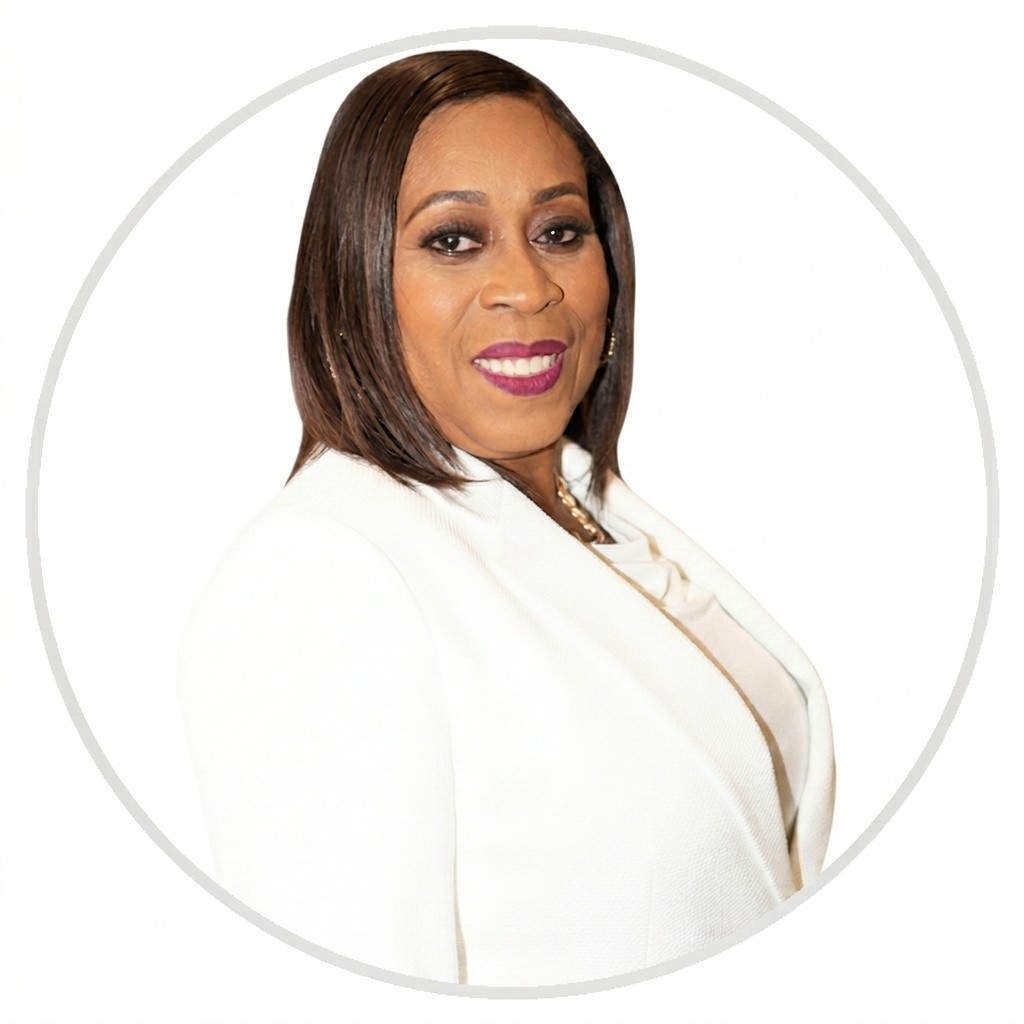
Founder, LPB Tax and Accounting Services. Certified AI Consultant. QuickBooks ProAdvisor. This report was generated using an AI-assisted review system she developed, based on information provided by the user. It has not been individually reviewed by a licensed CPA unless expressly stated.
Ready to work directly with a CPA?
LPB Tax and Accounting Services offers full-service filing and year-round advisory. Book a free 15-minute call with Nicolette to discuss your specific situation.
Disclaimer: This analysis was generated using AI-assisted review tools based on information provided by the user and has not been independently reviewed by a licensed CPA unless expressly stated. It is for informational and educational purposes only and does not constitute tax, legal, or accounting advice. A full review of your actual return, source documents, and facts is required before relying on any recommendation. For personalized CPA support, contact LPB Tax and Accounting Services at lpbservices.com.